
Article
Local Backlinks: How a Small Business Can Earn Them
Local backlinks come from sites tied to your area, and many small businesses can earn a few without a big campaign. Here is where to look and how to ask.
By James Borland
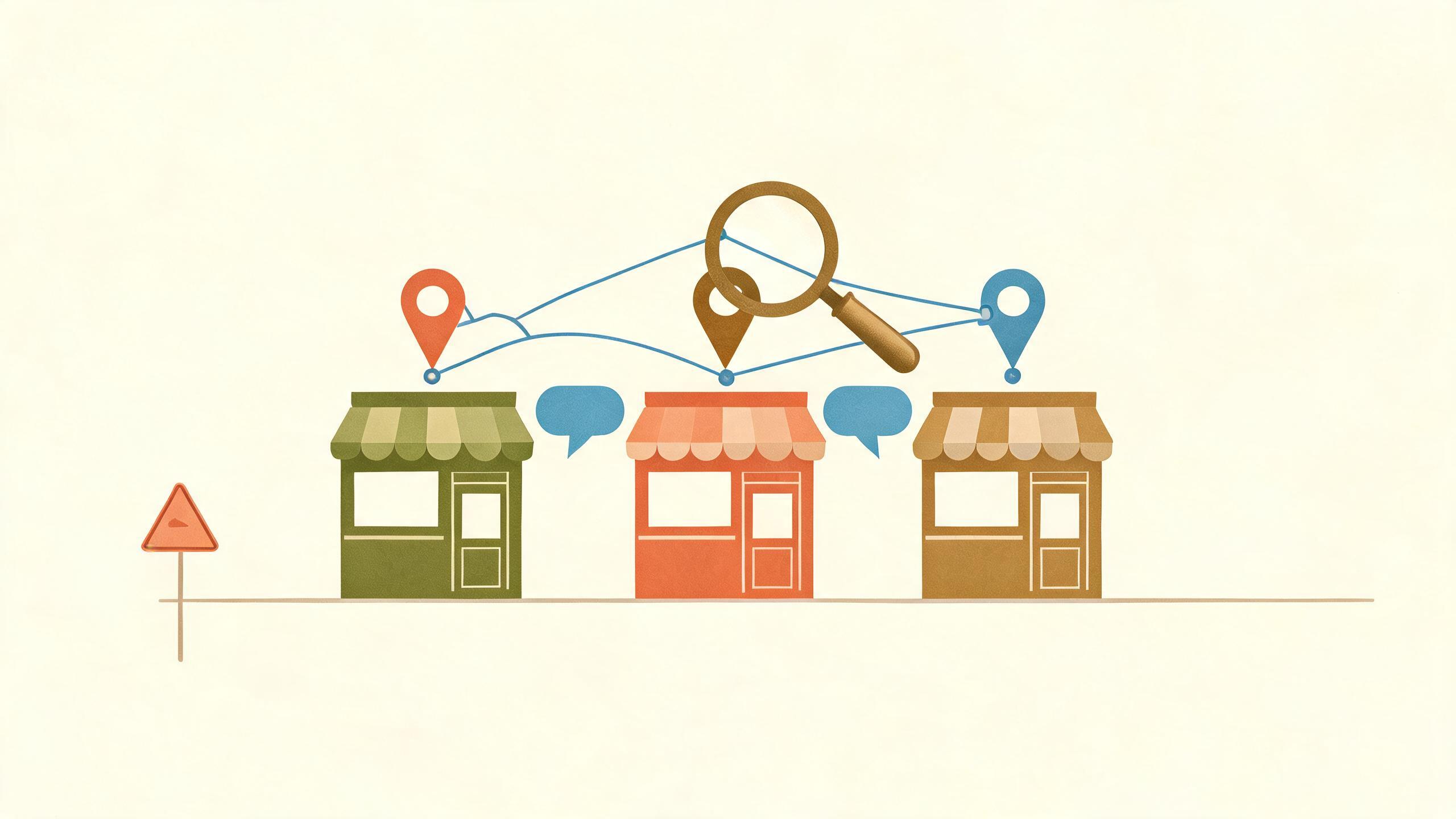
Local backlinks are links to your website from pages tied to your area: local news sites, community groups, school pages, event listings, partner businesses and local directories. They are one of the things that help a business look established to people in the area, and they support the work you do on your Google Business Profile and your website. Nobody outside Google knows how much any single link counts.
What are local backlinks?
A local backlink is a link to your website from a site that is genuinely connected to where you do business. That could be the local newspaper, a school booster page, a neighborhood newsletter, a business improvement district, a partner company in a complementary trade, or a chamber of commerce directory.
Google says local results are based mainly on relevance, distance and prominence. Prominence reflects what Google knows about your business from across the web, including links, articles and directories. What that means in practice: a local link is one small signal among many, and no one outside Google knows its exact weight.
Local backlinks support two things that are more directly in your control: an accurate Google Business Profile and a useful website. If those are thin, links alone will not carry much. If they are solid, links can help you look more established. Results vary, and the timeline is usually months, not days.
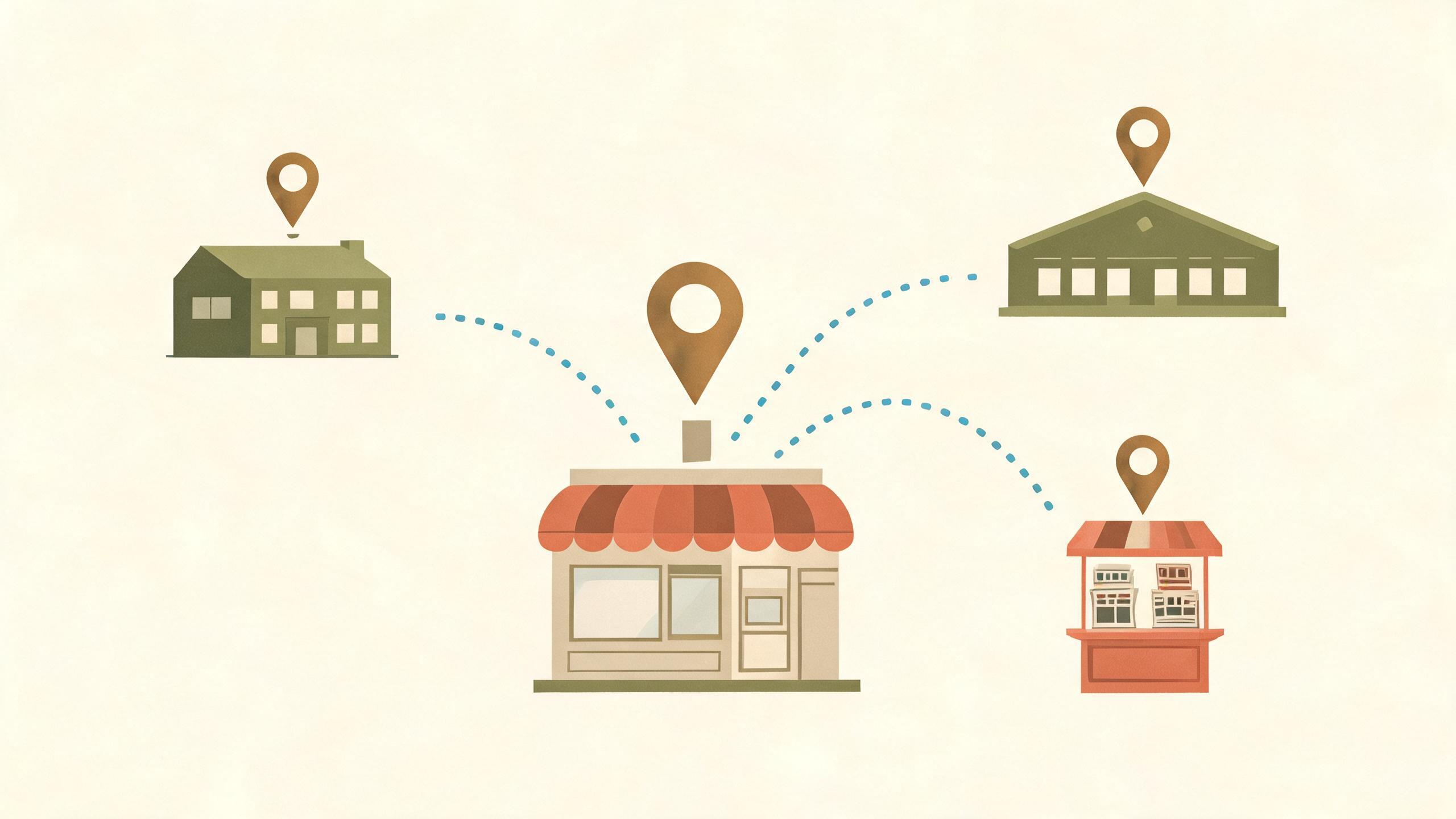
Where can I find local link opportunities?
Start with what you already belong to. Those are the easiest links to earn because the relationship is real.
- Organizations you are part of. Your chamber of commerce, trade association, business improvement district or community group often lists members with a link. Ask if your member page includes a link to your site, and update the details if it is stale.
- Suppliers, partners and complementary local businesses. Many have a "who we work with" or "partners" page. A landscaper and a hardscaper, for example, can list each other where it genuinely helps a customer decide.
- Local event, sponsorship and volunteer pages. If you already support a 5K, a school fundraiser or a community cleanup, the organizer may list sponsors. Ask whether that listing includes a link.
- Community calendars, local resource pages and neighborhood newsletters. Many keep a short list of useful local businesses. A simple email asking to be added where relevant often works.
How do I get a link from local news and community sites?
Local news and community sites link to businesses when there is a reason to. Your job is to give them one.
- Have something genuinely newsworthy or useful. A community project, a free workshop, seasonal maintenance advice your local audience actually needs, or a hiring push for a hard-to-fill role can all qualify.
- Find the right person. Look at who writes about local business, community events or your trade. Send your email to that reporter or editor, not a general inbox.
- Write a short, personal email. Put the local angle in the first line. Two or three sentences is enough: what is happening, why it matters locally, and what you can offer.
- Offer your expertise. You can offer to answer questions or be a source on your trade. That is often easier for a busy reporter than covering an event.
- Never pay for coverage presented as news. If money changes hands, it should be labeled as advertising, not treated as a news story.
A short example you can adapt: Subject line — [Your trade] owner available to answer storm-prep questions. Body — Hi [name], I own a [trade] business in [town]. With [local weather or seasonal event] coming, I can answer reader questions about [specific topic] if that is useful. I can reply by email or phone, whatever is easier.
How do sponsorships and partnerships earn links?
Sponsorships can earn links, but the honest framing matters. Sponsor events, teams or causes you actually care about, and ask whether the organizer lists sponsors with a link on the event page. Some do, some do not.
Google asks that links given in exchange for money or goods be marked as sponsored. That means a sponsor link usually should not be treated as a ranking tactic. Treat it as visibility and referral traffic instead. If the organizer marks it as sponsored, that is the correct handling, and it still helps people find you.
Partnerships are often a better fit for a small business. Write a genuinely useful guide with a complementary local business and link to each other where it helps the reader. A plumber and an electrician, for example, might each publish a short page on when to call which trade. The link should sit inside content a reader would want, not as a bare exchange.
| Option | Best for | Notes |
|---|---|---|
| Sponsorship | Visibility and community goodwill | Ask whether sponsors are listed with a link. Sponsored links should be marked as sponsored. |
| Partnership content | A useful page readers will actually use | Both sides link where the link genuinely helps the reader. |
| Local directory | Being found by people already looking | Often more useful for customers than for links. |
Which local directories are worth listing in?
A local directory is worth listing in when real customers use it to find businesses like yours. Well-known map apps, your chamber of commerce and your trade association are the usual starting points. Whether or not those listings pass link value, they help people find you.
The most important habit here is consistency. Keep your business name, address and phone number the same everywhere, including abbreviations and suite numbers. Mismatched details make it harder for both customers and search engines to connect the listings to the same business.
Skip sites that exist mainly to sell links or paid listings with no real audience. If the only reason to be there is a link, that is a sign to leave it alone. For a step-by-step approach to getting listings consistent, see our guide to building and fixing local citations.
What local link tactics should I avoid?
Some tactics are widely considered risky or against Google's published spam policies. Avoiding them protects the work you are doing elsewhere.
- Buying links. Paying for links that pass ranking signals is a link scheme.
- Link exchanges at scale. A handful of genuine partner links is normal. A network of swaps is not.
- Private blog networks. Sites built only to host links offer no real audience and carry risk.
- Paying or offering free services for reviews. Reviews should come from real customers without incentives. If you want more reviews, ask every customer and make it easy to leave one.
- Paid posts that hide the payment. If a site publishes something you paid for, it should say so.
- Keyword-stuffed anchor text requests. Let the linking site describe you in its own words. A natural link often just uses your business name.
How do I track the links I earn?
Tracking does not need to be complicated. A simple list keeps you from re-emailing the same person and helps you see what is actually happening.
- Keep a spreadsheet. Columns: who you contacted, when, what you asked for, whether they replied, and whether a link went live. Add the URL when it does.
- Check Google Search Console. The links report shows a sample of sites that link to you. Menu names change, so look for the links section under the navigation rather than memorizing a path.
- Watch referral traffic in your analytics. This shows visits that arrived from another site. It is a useful sanity check, though many things affect rankings, so changes take time and are hard to pin on one link.
- Consider the AI angle. Mentions on local sites may also be among the things AI assistants read when they answer local questions, though nobody outside the platforms knows the full picture. If that matters to you, the guide on how to show up in ChatGPT local recommendations covers the practical side.
If you want a repeatable order of operations for the rest of your local presence, a local SEO checklist for a small business is a good companion. If you would rather use software to speed up the outreach and follow-up, the guide on how to use AI for local SEO covers where it helps and where it does not.
Related guides: an SEO action plan and how to respond faster to Local Services Ads leads.
Frequently asked questions
Do local backlinks help with the map pack?
Google says local results are based mainly on relevance, distance and prominence, and prominence reflects what Google knows about a business from across the web. Links are one input among many. A local link can support prominence, but it will not override a weak or inaccurate Google Business Profile. Nobody outside Google knows how much any single link contributes, so treat links as one part of a broader local presence.
Do links from local blogs count as citations?
The word citation usually refers to a mention of your business name, address and phone number on another site, whether or not it links. A link from a local blog is a link. If the blog also lists your name, address and phone consistently, that mention can serve as a citation too. Both can help, in different ways, and neither replaces accurate details on your own site.
Are sponsorship links allowed by Google?
Yes, sponsorship is allowed. Google asks that links given in exchange for money or goods be marked as sponsored, so they do not pass ranking signals. In practice that means a sponsor link is usually best treated as visibility and referral traffic rather than a ranking tactic. If the organizer marks the link as sponsored, that is the expected handling.
How many local backlinks does a business need?
There is no published number. Google does not say how many links a business needs, and anyone who gives you a figure is guessing. A small number of genuine links from organizations, events and partners you actually work with is a reasonable goal for a local business. Quality and relevance matter more than volume, and results vary by market.
More from the blog
- Local SEO for Restaurants: A Practical Guide
5 October 2026
- How to Rank in Google AI Overviews for Local Business
5 October 2026
- A Practical Guide to Local SEO for Law Firms
5 October 2026