
Article
Citations for Local SEO: Build and Fix Them
Local citations are mentions of your business name, address and phone number on other sites. Learn how they work, how to build and fix them step by step, and how to keep them consistent.
By James Borland

Local business citations are mentions of your business name, address and phone number on other sites. For local SEO, citations matter because they help search engines and customers confirm that your details are correct. They are not a magic switch, and nobody outside Google knows exactly how much weight they carry, but they are part of the routine that supports your visibility.
This guide walks through a specific task: cleaning up and building citations for a small local business. You can start it this week with a spreadsheet and a browser. Results vary, and some platforms take weeks to update, so treat this as groundwork rather than a quick win.
What are local SEO citations and why do they matter?
A citation is any online mention of your business's name, address and phone number (often called NAP). That includes directory listings, maps apps, review sites and local news pages. It can also include your website address and hours.
Consistent details help search engines and customers trust that the information is correct. This is common practice rather than a published rule. If one site shows an old phone number and another shows a new one, people may call the wrong number or assume the business has closed.
A citation is not the same as a backlink. A citation may or may not include a link to your site. A backlink is a link; a citation is the mention itself, although many listings include both.
Citations are one local signal among many. Google says local results are based mainly on relevance, distance and prominence. Citations may feed into prominence, but nobody outside Google knows how much they count.
How do data aggregators and directories work?
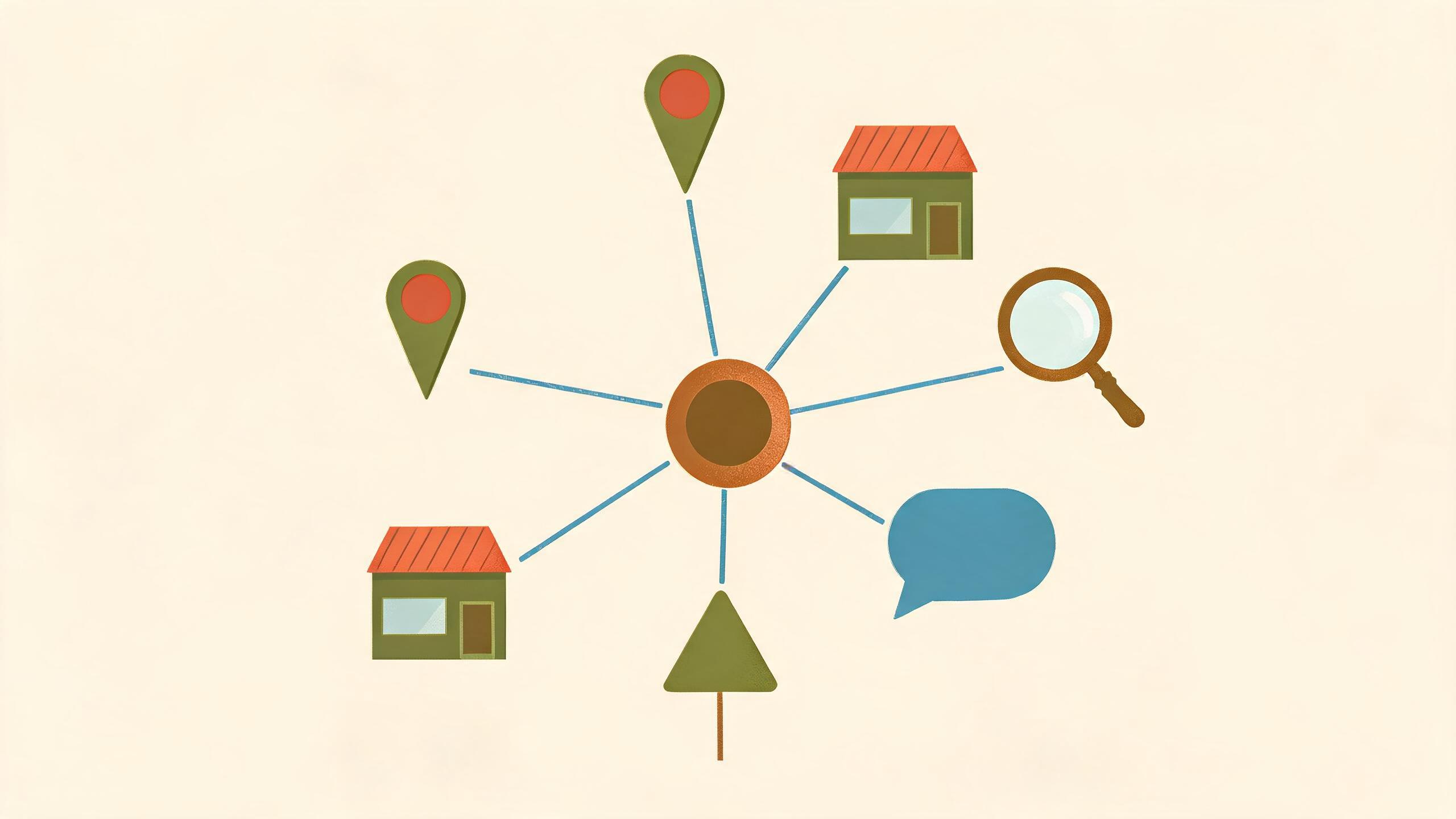
Data aggregators are businesses that collect business data and supply it to many directories, maps and apps. They are not household names, but their records can appear on many sites.
A wrong record at a source can spread to many places. If an aggregator has your old address, that error may show up in maps apps, review sites and other directories. Fixing the source is often more efficient than chasing every downstream site.
Structured citations are directory-style listings with fields for name, address and phone. Unstructured citations are mentions in articles, blog posts or news stories where your details appear in the text. Both can help, but structured listings are easier to control and update.
| Option | Best for | Notes |
|---|---|---|
| Structured citation | Accurate NAP fields | Easier to claim and edit; common on maps and directories |
| Unstructured citation | Local news and blogs | Harder to control; may not include a link |
How to build local citations step by step
Step 1: Write one master version of your details
Open a document and write your business name, address, phone number, website and hours exactly as they should appear everywhere. Decide on abbreviations now. For example, use "Street" or "St." consistently, and be clear about your suite number.
Step 2: Claim and verify your Google Business Profile first
Your Google Business Profile is often the listing customers see first. Claim it, verify it and make sure the details match your master version. If you serve customers at their location rather than at your address, see our guide to setting up a Google Business Profile for a service area business.
Step 3: Search for your business name and phone number
Search your business name in quotes, then search your phone number. Look for existing listings, duplicates and old addresses. Write down what you find in a spreadsheet. This step often reveals listings you forgot about.
Step 4: Claim and correct major maps and review platforms
Claim or correct your listings on major platforms such as Apple Maps and Bing Places. Review sites matter too, especially those your customers already use. Each platform has its own claiming process; menu names change, so look for "claim this business" or "add a missing place."
Step 5: Add industry and local listings
Add listings for your trade or profession, such as a trade association, and for local organizations like your chamber of commerce. Only add listings where real customers look. A long list of low-quality directories rarely helps and can create more records to maintain.
Where should you create citations for local SEO?
Start with general maps platforms and directories that many customers use to find and check local businesses.
Next, look for directories specific to your trade. A plumber might check a plumbing association; a dentist might check a dental association. For health, dental and legal businesses, check the relevant advertising and privacy rules before you publish details, because those rules vary.
Local organizations are another source. A chamber of commerce listing, a community page or a sponsorship page can be a citation. These are often unstructured, but they still confirm your details.
If you are a service area business, hide your address where the platform allows it. Match the setting you use on your Google Business Profile so the information is consistent. For a wider routine, see our local SEO checklist for a small business.
How to keep your citations consistent and updated
Keep a simple spreadsheet with columns for the site, the listing URL, who owns the login and the date you last checked it. This makes updates faster when something changes.
After a move, a new phone number or new hours, update every listing. Start with your Google Business Profile, then work through the spreadsheet. Results and timing vary; some platforms update quickly, others take weeks.
Fix duplicates through each platform's own process. Some platforms have a "report duplicate" or "suggest an edit" option. If a duplicate is tied to a data aggregator, correct the aggregator where possible.
Avoid paid bulk submissions to low-quality sites. Quality and accuracy matter more than count. A few correct, active listings are easier to maintain than dozens of stale ones.
How do citations affect AI search visibility?
AI assistants and AI Overviews may draw on business details published across the web. Nobody outside the platforms knows how they choose which businesses to mention. Consistent details reduce the chance that an assistant finds conflicting information, but no one can promise an outcome.
Treat citations as one part of a broader routine. Your website content, your Google Business Profile and your reviews all play a role. For the website side, see our guides to page speed and SEO and what metadata is. Our SEO action plan covers how to order wider SEO work, and for a broader look at AI and search, see our article on the role of AI in SEO.
Frequently asked questions
What are citations in local SEO?
A citation is an online mention of your business name, address and phone number, plus sometimes your website and hours. It can appear on directories, maps apps, review sites or local news pages. The goal is to have accurate, consistent details wherever customers might look.
Are citations the same as backlinks?
No. A backlink is a link from another site to yours. A citation is the mention of your details; it may or may not include a link. Some listings include both, but the two are not the same thing.
Do I need to pay for a citation service?
Usually not. You can claim and correct most listings yourself for free. Paid services sometimes create low-quality listings or duplicate records. If you do pay, check exactly what you get and whether you keep control of the listings.
How long do citation changes take to show up?
It varies. Some platforms update within days, while others take weeks or longer. Data aggregators may take time to pass changes downstream. Check back on your spreadsheet after a few weeks rather than expecting overnight changes.
What should I update if my business moves or changes its phone number?
Start with your Google Business Profile, then work through your citation spreadsheet. Update maps apps, review sites, industry directories and local organizations. Also check for duplicates and old records that still show the previous details.
More from the blog
- Local SEO for Restaurants: A Practical Guide
5 October 2026
- How to Rank in Google AI Overviews for Local Business
5 October 2026
- A Practical Guide to Local SEO for Law Firms
5 October 2026