
Article
Local SEO for Restaurants: A Practical Guide
Local SEO for restaurants comes down to a handful of tasks you can do this week: fix the Google Business Profile, put the menu on the page as text, keep listings consistent and ask for reviews the same way every time.
By James Borland
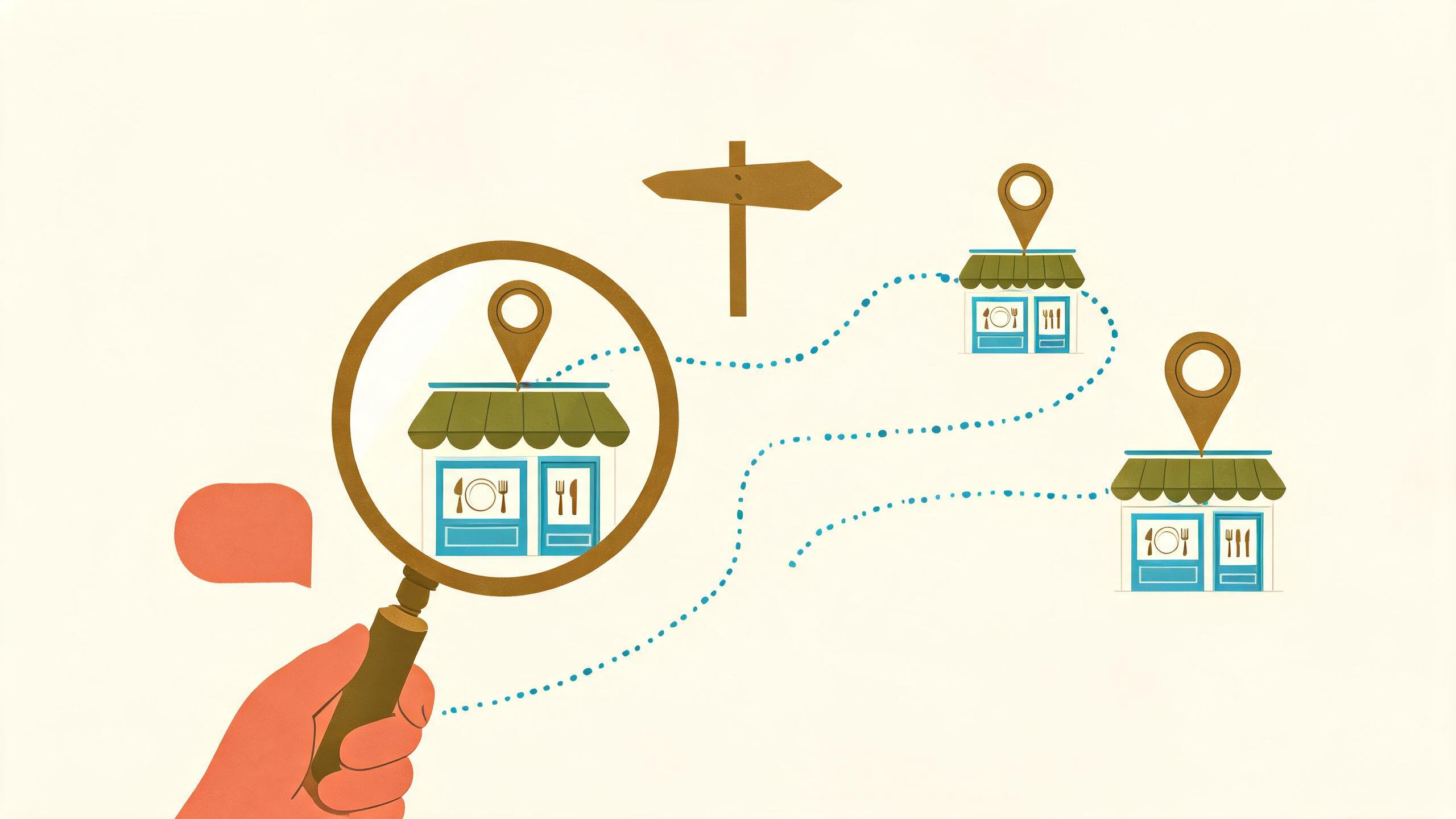
Local SEO for restaurants means helping nearby diners find your dining room, takeout counter or reservation page. It usually comes down to an accurate Google Business Profile, a readable menu on a real page, consistent listings and steady reviews. This guide walks through one week of tasks, in order, for a restaurant in a small city or a single neighborhood.
Why local search matters for a restaurant
Many diners search for a place to eat near them or by neighborhood, and Google often shows local results, including the map pack, for those searches. That map pack often sits above the regular links, so a restaurant that appears there is visible to people who are ready to eat soon.
Google says local results are based mainly on relevance, distance and prominence. You cannot change where a diner is standing, so distance is out of your hands. Relevance is what you can control: the categories, the menu text, the attributes and the words on your site. Prominence is the outside picture: reviews, mentions and links from local pages.
Expect this to take months rather than weeks, and expect it to vary by market. A restaurant in a dense downtown competes with more listings than one on the edge of town. Nobody can promise a position in the map pack, and the work still usually helps.
How to set up a restaurant's Google Business Profile
Sign in at business.google.com if you have not already claimed the listing. If someone else manages it, request access rather than creating a duplicate.
- Use the restaurant's real name exactly as it appears on the sign and the receipt. No city names, no keyword lists.
- Enter the street address and one main phone number, and use those same details everywhere else online.
- Pick the most specific primary category that fits, such as a cuisine or a type of establishment, then add only a few relevant additional categories.
- Fill in regular hours, holiday hours and attributes that are actually true, such as outdoor seating, takeout or wheelchair access.
- Upload real photos of dishes, the dining room and the entrance, and add new ones when the menu changes.
How to make the menu and website work for local search
Put the menu on the website as text on a real page. A PDF or a photo of the menu is hard to read on a phone, and search engines have a harder time understanding it. Text also lets someone search for a dish name and land on the page.
Show the address, phone number and hours on every page, usually in the footer, plus a way to reserve or order. Update the menu page whenever prices or dishes change; a stale menu can cost reservations.
Restaurant structured data is code that describes the page in a format search engines read. You can add markup for the restaurant, its address, its hours and its menu. It usually helps Google understand the page, and it is not a ranking switch.
A simple home page outline, with placeholders, adapted from a fictional restaurant:
- Heading: [Restaurant name] — [cuisine] in [neighborhood or town]
- One sentence: what you serve and who it is for
- Hours table and phone number, visible without clicking
- Buttons: Reservations, Order takeout, Get directions
- A short menu summary as text, linking to the full menu page
- Three real photos: a dish, the room, the entrance
- A block with the street address and a link to the Google Maps listing
| Option | Best for | Notes |
|---|---|---|
| Menu as text on the page | Many restaurants | Readable on phones; update it when prices change |
| Menu as PDF | Printing and events | Keep the text version too, so people can read it on a phone |
| Menu as an image | Visual specials | Useful alongside text, not instead of it |
How to keep listings consistent across the web
Keep the name, address and phone number identical on the website, the Google Business Profile, review sites, and the reservation and delivery platforms you use. Small differences, like a suite number in one place and not another, make it harder for search engines to connect the listings to one business.
When hours, the phone number or the address change, update every listing in the same week. Holiday changes are the common case: a listing that says you are open when the door is locked is worse than no listing.
A full local SEO checklist for a small business covers the wider set of listings, and citations for local SEO explains how to build and fix them. If you want to see these same steps written for a different trade, the guide to local SEO for law firms shows how the pieces line up elsewhere.
How to ask for and reply to reviews
Ask every guest the same way. A line on the receipt or a small card on the table pointing to the review link works, and it keeps the ask consistent instead of depending on who is serving.
- Never offer a discount, a free item or anything else in return for a review.
- Never write reviews yourself, buy them, or ask only guests you know are happy.
- Reply to each review briefly and politely, then move a complaint offline.
Review platforms and the rules around incentives vary, so check the current rules for the platforms you use before you print anything. A reply shows other readers that someone is paying attention.
How to earn local mentions and links
Local food writers, neighborhood newsletters, event pages and community groups sometimes mention or link to restaurants that take part in local life. A booth at a street fair, a fundraiser, a cooking class or a partnership with a nearby business can lead to a mention, though none of it is owed to you.
If money changes hands for a placement, it needs to be marked as sponsored. Never buy links and never pay for a placement that is presented as editorial.
One practical use of AI tools here is drafting the short description you send to an event page or a local newsletter, then editing it yourself. There is a wider list in our guide to using AI for local SEO if you want to go further.
How to tell whether local SEO is working
Open the profile's performance view and watch calls, website clicks and direction requests. Google changes which metrics it reports, so treat the list as a guide rather than a fixed scoreboard.
Track reservations or online orders that come from the website, using whatever booking or ordering tool you already have. A simple note of where each booking came from is often enough.
Review the numbers monthly or quarterly instead of daily. Weather, holidays, a new competitor and a slow week all move these numbers, and a daily check mostly produces noise. Results vary, and the direction of travel over a few months is more useful than any single week.
Frequently asked questions
Do I need a website if I have a Google Business Profile?
A profile alone can bring in calls and direction requests, and some small restaurants operate that way. A website gives you a place for the full menu as text, reservations, and details the profile does not hold. It usually helps, and many restaurants start with the profile and add a simple site later.
Should my menu be a PDF or text on the page?
Text on the page is easier to read on a phone and easier for search engines to understand. A PDF can still be useful for printing, and if you keep one, put a text version on the page as well. Update both when the menu changes.
Do delivery app listings help local search?
They can bring orders, and they also create another listing that has to match your name, address and phone number. Keep the details identical to your profile and website, and update the delivery listings whenever the hours change. The effect on search visibility varies.
Does schema markup help a restaurant appear in Google?
Restaurant structured data helps Google understand the page, including the address, hours and menu. It is not a switch that moves a listing into the map pack. Add it so the page is clear, and keep the markup consistent with what people actually see.
More from the blog
- How to Rank in Google AI Overviews for Local Business
5 October 2026
- A Practical Guide to Local SEO for Law Firms
5 October 2026
- Local Backlinks: How a Small Business Can Earn Them
5 October 2026